The Knowledge Assistant reads your organisation's documents and answers the questions your team or your customers ask. Every answer carries its source, so anyone can check where it came from.
No sales track: half an hour tells you exactly what it does for your organisation.
"A standard assistant gives standard answers. This one knows your documents, your rules and the way you talk." The premise behind the Knowledge Assistant
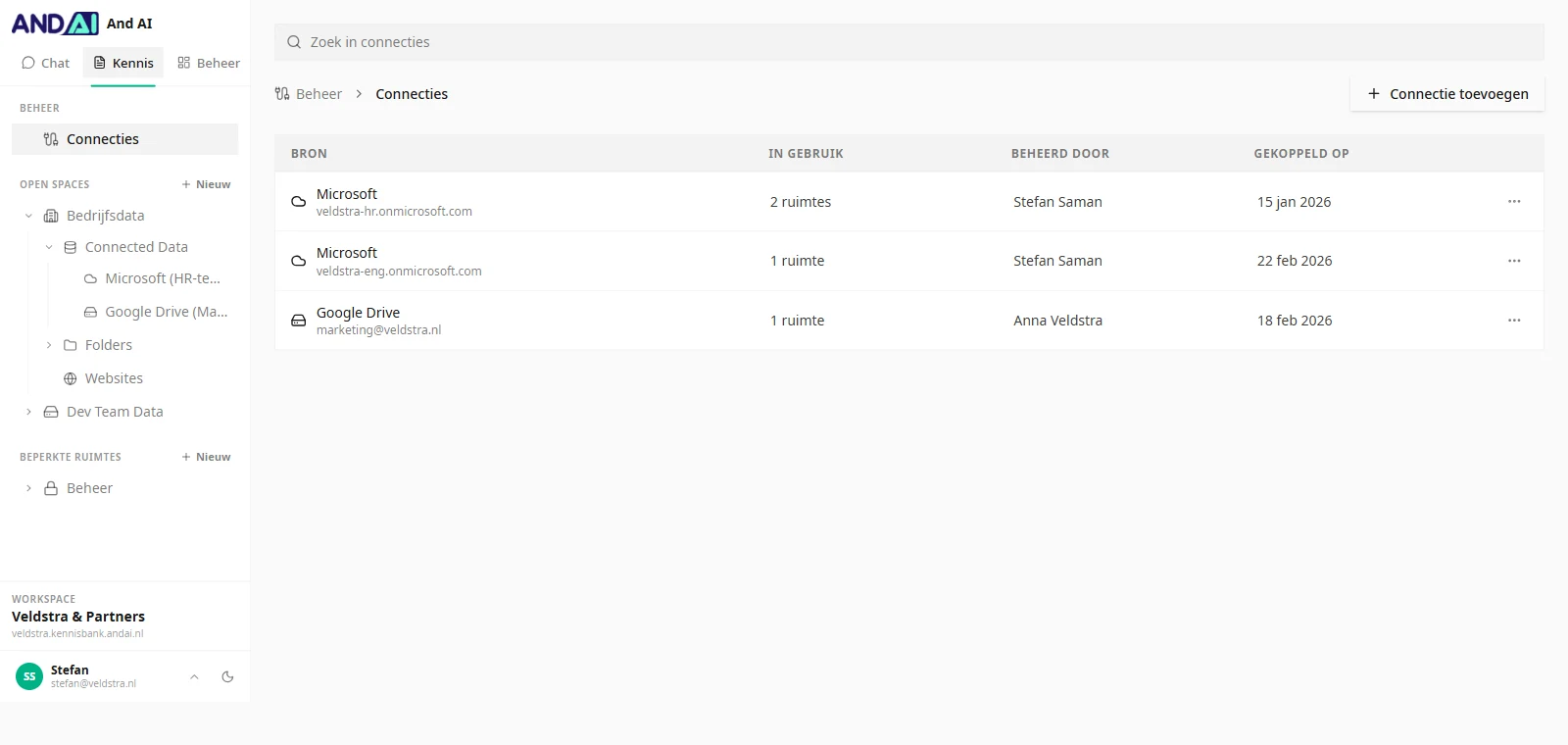
No migration and no second archive to maintain. You connect the systems you already use and the assistant keeps up with them.


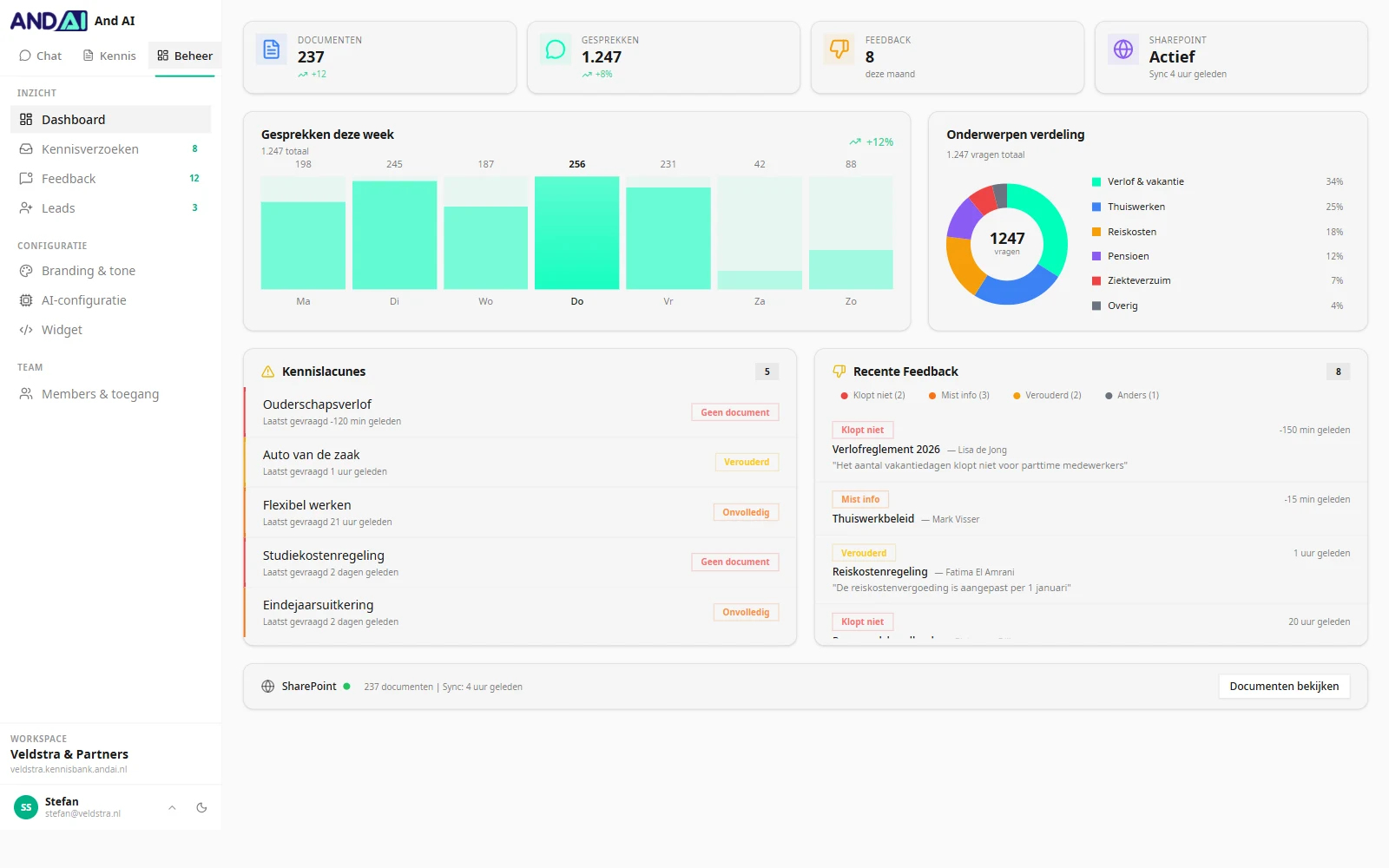
Every question that goes unanswered is a hole in what you have written down. You get them in a list instead of losing them to corridor conversations.
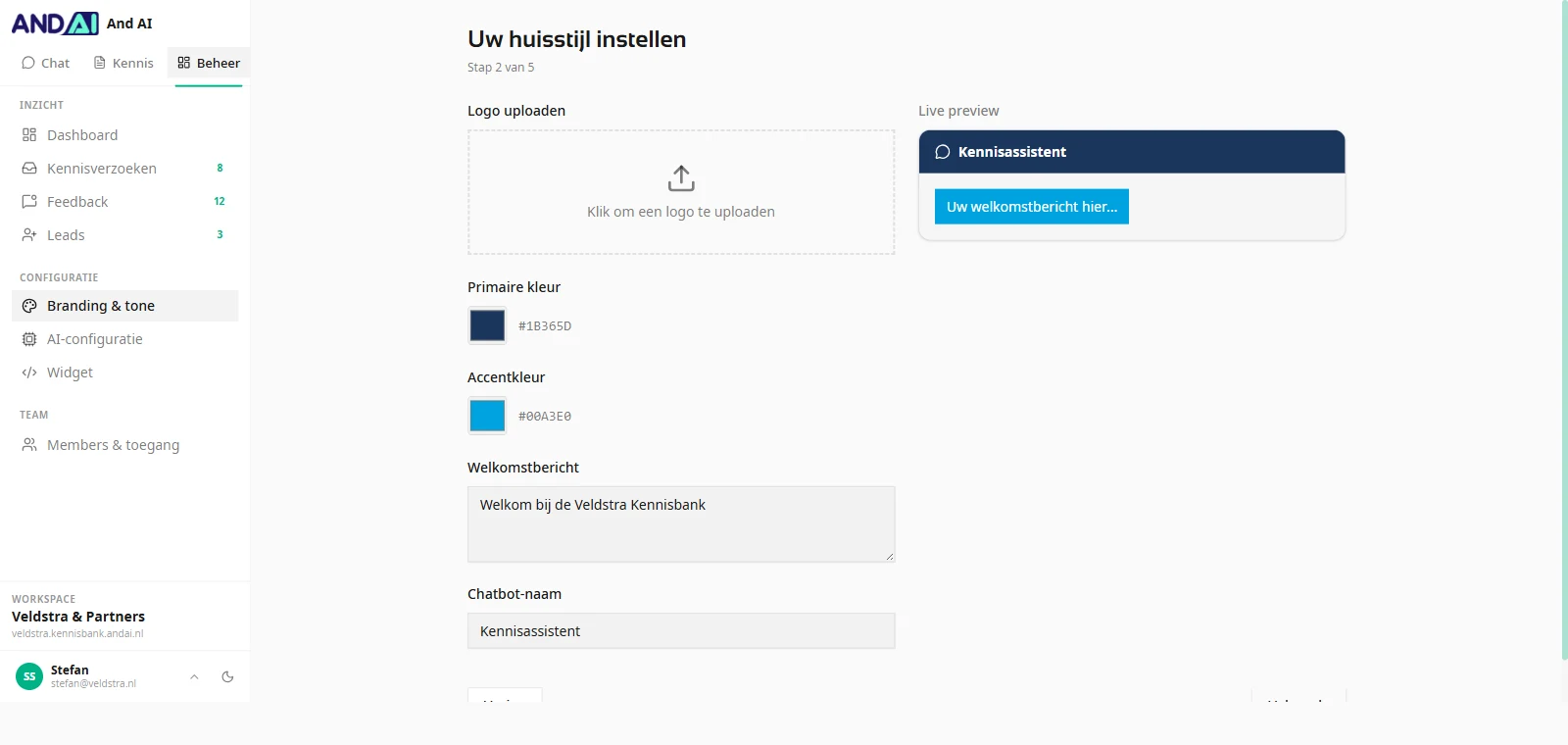
The assistant carries your name and your colours, and talks the way your people talk. You set it up and see the effect straight away.

We set it up. After that you never need to call in a developer.
Link SharePoint, Drive or Nextcloud, or upload individual documents. The assistant indexes what you point it at.
The assistant's name, colours and tone, plus who may consult which spaces.
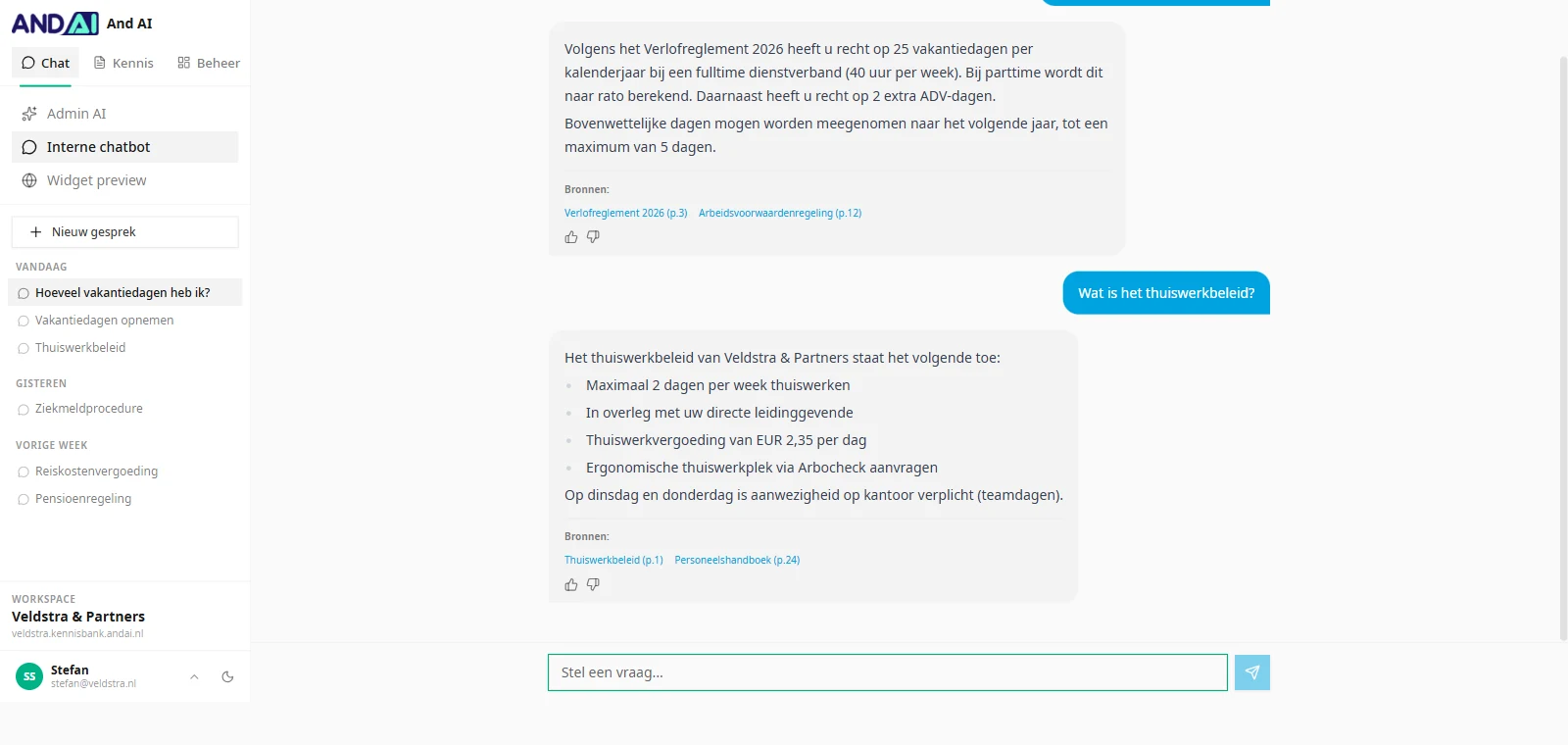
Internally through the chat, externally through the widget on your site. The admin view shows what gets asked and what is missing.
Knowledge that lives in three heads stops moving the moment those three people are away. Once it sits in one place and can be queried, everyone gets on without interrupting anyone first.
Wherever people keep looking up or asking the same thing, there is something to gain. Three situations we run into most.
The assistant sits on your site as a widget and handles the standard questions. What it cannot answer reaches you as a knowledge request or a lead.
If you work with other institutions, nobody has to tour every website. One way in, and each answer still shows which document it came from.
New colleagues search themselves silly and experienced ones get interrupted all day. Both problems have the same cause: nothing is written down where you can query it.
No proposal process up front. We show it and start from your situation.
Online, with someone who built it. Not a salesperson who has to look up the answer.
Rather email first? [email protected]
Exactly where they live now. The Knowledge Assistant connects to your existing sources and keeps them in sync. You decide per space which folders and files take part; anything you do not connect stays out of view. Processing runs through European data centres under the GDPR, and your documents remain yours.
It says so, rather than taking a guess. The question lands in your knowledge requests, so you can see which document is missing and add it.
After the demo call, count on two to four weeks until the first version is live. How much documentation you have, and what state your sources are in, decides where you land in that range.
Yes. Alongside the internal environment there is a widget you drop onto your own site with a snippet of embed code. You choose which spaces the widget may draw on, so internal material stays internal.
Every answer carries its source, down to the document name and page, so anyone can check where it came from. If something is off, the reader flags it in one click and you see that report in the admin view. That tells you which document needs attention.
No. Alongside open spaces there are restricted spaces, and you set access per employee. An answer can only draw on sources the person asking is allowed to see.
That depends on the number of sources, the number of users and whether you also point it at your customers. In the demo we walk through your situation and you get a concrete proposal afterwards.
An online demo with someone who built it. You will also hear when it is not right for you.
Book a demo